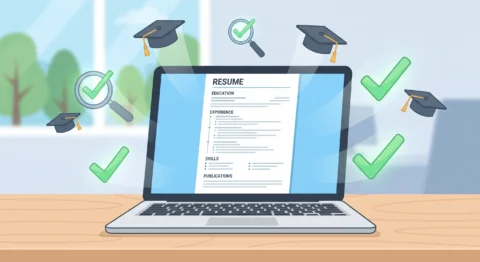
7 Proven Steps to Write a Winning CV for University Application: Key Takeaways
Welcome to the ultimate masterclass on securing your academic future and effectively planning your educational trajectory. When you sit down to draft a cv for university application , you are doing much more than merely listing your previous grades or basic qualifications. You are strategically pitching your long-term potential, intellectual curiosity, and scholarly dedication directly to a highly discerning admissions committee.
Navigating the intensely competitive landscape of modern higher education requires a highly calculated approach to personal branding and document presentation. Most applicants lazily submit generic documents that completely fail to highlight their unique academic trajectory or personal passions. By following our meticulously researched blueprint, you will easily stand out from the massive pile of standard, uninspired applications sitting on the reviewer’s desk.
Our comprehensive guide unpacks the exact, step-by-step strategies heavily favored by top-tier academic institutions globally. You will discover exactly what to include in a university application resume, how to expertly structure your document, and how to entirely avoid the hidden formatting traps that get applications rejected automatically. Before we dive into the detailed mechanics of building your flawless academic profile, let us review the core principles that will dictate your overall success.
Key Takeaways:
• Prioritize academic achievements and rigorous coursework over unrelated part-time jobs.
• Tailor your objective statement to perfectly align with the specific faculty or degree program.
• Quantify your leadership roles and extracurricular impact with hard, verifiable numbers.
• Maintain a pristine, ATS-friendly layout by utilizing the best cv for university application template.
• Proofread obsessively; academic institutions penalize grammatical and typographical errors heavily.

Understanding the Difference Between an Academic CV and a Professional Resume
Many aspiring students mistakenly treat their academic admissions document exactly like a corporate job application. This fundamental error can instantly derail your chances of acceptance, as an academic CV serves an entirely different, specialized purpose. Grasping the core academic cv vs professional resume differences is the absolute first step toward building a compelling candidate profile.
While a standard corporate resume focuses heavily on past work history, corporate profitability, and operational efficiency, your university admissions CV must center squarely on your intellectual curiosity. Admissions officers are actively looking for candidates who demonstrate a lifelong commitment to learning, research, and collaborative problem-solving. They desperately want to see concrete evidence of critical thinking, academic rigor, and a clear, unwavering passion for your chosen field of study.
Therefore, the formatting and structural hierarchy of your document must reflect these specific academic priorities. Your education section should take center stage, often completely replacing the professional experience section at the very top of the page. By understanding this core difference and focusing on a true academic achievements resume, you naturally shift your mindset from an “employee” to a “scholar,” making your application instantly more appealing. To reinforce these foundational strategies, we highly recommend exploring additional resources on mastering your interview skills to ensure holistic preparation.
Essential Contact Information and Professional Formatting Tips
Establishing a polished and professional first impression begins with the very top of your document. The contact information section might seem trivial, but it securely sets the baseline for your organizational skills and attention to detail. Knowing how to format an academic cv for college appropriately proves to admissions committees that you possess absolute precision and maturity.
First and foremost, you must use a strictly professional email address; ideally, an address containing only your formal first and last name. Discard any informal, humorous, or outdated email handles from your childhood immediately. You should also strategically provide a clean hyperlink to a completely optimized LinkedIn profile, which acts as a dynamic, interactive extension of your static application.
In terms of visual formatting, simplicity is undeniably your greatest asset in this highly formal environment. Utilize highly legible, standard serif or sans-serif fonts such as Times New Roman, Arial, or Garamond to maintain maximum readability. Avoid using chaotic colors, eccentric graphics, or unusual layered layouts that might easily confuse Applicant Tracking Systems or distract human reviewers from your core message.
Crafting a Powerful Objective Statement for Your CV for University Application
The objective statement boldly acts as the compelling introduction to your entire academic narrative. A highly effective cv for university application always opens with a targeted, value-driven summary that hooks the admissions officer instantly. Drafting a flawless objective statement for university application cv sections requires balancing your genuine passion with concrete academic goals.
Instead of a vague, generic declaration of your desire to get accepted, you must clearly articulate your long-term intellectual passions. This critical section should be no longer than three to four tightly written sentences, effectively functioning as a concentrated elevator pitch. You need to explicitly mention the specific degree or program you are targeting, seamlessly blending it with your strongest foundational academic skills.
This proactive, forward-thinking approach immediately positions you as a visionary student rather than a passive, aimless participant. It clearly demonstrates that you possess a definitive roadmap for your educational journey and future career. Tailor this exact statement meticulously for every single institution you apply to, ensuring your goals align perfectly with the university’s unique mission and faculty expertise.
Showcasing Your Academic Background and Major Achievements
Your formal academic background is unequivocally the beating heart of your entire application strategy. Because you are directly applying for an educational program, this section must be exhaustive, meticulously detailed, and positioned prominently. Whether you are building a high school student cv for university admission or a complex cv for masters degree application, academic rigor must take priority.
Start by listing your current or most recent educational institution, directly followed by your expected graduation date and your current Grade Point Average (GPA). However, simply listing your school and grades is never enough to guarantee elite admission. You must actively contextualize your academic excellence by highlighting rigorous coursework, advanced placement classes, and specialized scholarly tracks that prove your readiness.
Additionally, create a dedicated sub-section specifically for academic honors, honor society memberships, and prestigious competitive awards. Use powerful, dynamic action verbs to describe exactly how you earned these distinct honors, rather than passively listing their titles. As extensively noted in a comprehensive guide by Indeed’s Career Advisors, accurately quantifying your academic rank or scoring percentile can dramatically boost your perceived value to the committee.
Highlighting Extracurricular Activities, Volunteer Work, and Leadership Skills
Top-tier universities do not merely accept dry transcripts; they actively accept dynamic, multi-dimensional human beings who will ultimately enrich their campus culture. Integrating extracurricular activities on CV sections provides a crucial window into your character, sustained work ethic, and overall social intelligence. Admissions panels actively seek out candidates who demonstrate a healthy, balanced lifestyle.
When detailing your direct involvement in student clubs, competitive sports teams, or local volunteer organizations, always prioritize depth of commitment. Long-term, multi-year dedication to two or three specific organizations speaks volumes more than brief, superficial stints in ten different casual clubs. It is vital to focus intensely on highlighting any direct leadership roles you assumed within these groups.
Quantify your community impact wherever possible; clearly note how many events you independently organized, how much funding you raised for charity, or how many new members you recruited. Knowing exactly what skills to put on cv for university effectively transforms generic club participation into measurable, undeniable leadership potential. Furthermore, ensure you clearly connect the vital soft skills developed in these roles directly to your future academic success.
Fatal HR Red Flags and Common Mistakes to Avoid on Your Application
Even the most brilliant, high-achieving students routinely sabotage their own applications by committing easily avoidable formatting and content errors. Understanding these critical red flags and common mistakes in cv for university application is absolutely essential for surviving the rigorous initial screening process. The most common and devastating mistake is submitting a generic, one-size-fits-all document to multiple distinct universities without customization.
Another massive, immediate red flag is the inappropriate inclusion of completely irrelevant personal information. Detailing your marital status, religious beliefs, or physical attributes violates standard professional norms and can trigger unconscious bias. Furthermore, unexplained chronological gaps in your educational or extracurricular history will immediately raise severe suspicions regarding your long-term reliability and academic commitment.
If you took a deliberate gap year or faced unavoidable health challenges, address them proactively and positively in your supplementary cover letter. Never leave a glaring, unexplained blank space on your timeline. Finally, typographical errors and grammatical inconsistencies are absolute dealbreakers in the scholarly world. Submit your completed document to multiple rounds of rigorous peer review before ever hitting the submit button.
Watch this expert breakdown on formatting an academic resume to avoid critical application mistakes:
Frequently Asked Questions About Building a University Admissions CV
Navigating the intricate complexities of higher education admissions naturally generates a multitude of highly specific questions from anxious applicants. One of the most frequently asked questions is whether younger students should include their middle school achievements. The definitive answer is no; you should strictly focus on your major accomplishments from the last four years to maintain relevance and demonstrate maturity.
Another incredibly common inquiry revolves around how to properly display hobbies and interests in university cv sections. You should only include hobbies if they directly demonstrate highly transferable soft skills, such as strategic thinking gained through competitive chess or discipline learned through marathon running. Random, passive interests like watching television or casual gaming should be strictly omitted from your professional academic profile.
Lastly, many inexperienced applicants wonder what exactly they should do if they possess zero formal, paid work experience. In these specific cases, you must seamlessly pivot your document’s focus toward rigorous academic research projects, intensive volunteer work, and dedicated student student cv template designs that highlight potential. Using the correct layout gracefully compensates for a lack of traditional corporate employment history.




Leave a Reply