
Career Options to Master Your Professional Future in 2026
Navigating modern career options requires far more than scrolling through generic job boards and sending out identical resumes. Hiring managers and automated screening systems now reward specialists who deliberately align their capabilities with shifting market demands.
Whether you are entering the workforce or pivoting after a decade in corporate management, knowing how to evaluate modern career options protects your earning potential. Below are the core strategic takeaways you will master in this blueprint:
• Skill-First Positioning: Audit your core competencies to unlock lucrative career paths across technology, operations, and consulting without starting at the bottom.
• AI-Resilient Roles: Target future-proof career options in the AI era that combine analytical execution with human judgment and stakeholder communication.
• Work-Model Flexibility: Weigh corporate vs freelance career options objectively to build long-term job stability on your own terms.

How to Evaluate Modern Career Options Using Market Data
Most professionals pick their next role based on outdated titles rather than where capital and hiring budgets are actually flowing. When exploring alternative career options in 2026 , you must examine real-time labor data before investing months into new certifications.
Recent findings in the LinkedIn 2026 Career Opportunity Report reveal that 32% of professionals are taking roles outside their original field to build in-demand capabilities, while 72% of young office workers are even considering skilled trades and technical operations. Exact compensation ranges and role availability always vary by local market, industry maturity, and regional economic policy.
To filter high-demand professions accurately, analyze fifty active job descriptions in your target region and highlight repeated software requirements and performance metrics. This empirical approach turns guesswork into a structured professional development plan that hiring committees respect immediately.
Aligning Career Options With Transferable Workplace Skills
Your past job titles do not define your ceiling; your underlying problem-solving mechanics do. Successfully matching career options to personal strengths starts with deconstructing your daily tasks into universal business outcomes like revenue growth, cost reduction, or process automation.
For example, a former operations supervisor already possesses the project scoping, vendor negotiation, and cross-functional leadership required for technical product management or client success director roles. Packaging these transferable workplace skills correctly ensures Applicant Tracking Systems (ATS) rank your profile in the top ten percent of applicants.
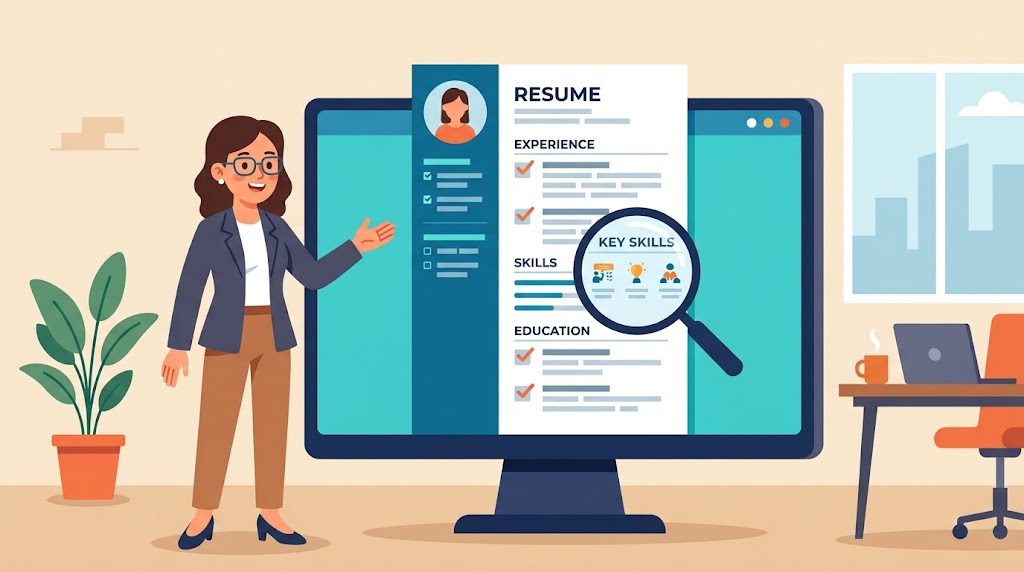
Before submitting applications to new career options , overhaul your document structure using our ATS resume optimization blueprint to mirror exact industry terminology. Recruiters spend less than eight seconds on an initial scan, so front-loading quantifiable impact metrics is mandatory.
Corporate vs Freelance Paths: Comparing The 7 Top Tracks
When comparing corporate vs freelance career options , you must weigh predictable enterprise infrastructure against independent equity and schedule autonomy. The seven most resilient tracks right now span both models: AI Workflow Operations, Revenue & Sales Enablement, Cybersecurity Governance, Digital Supply Chain Management, Healthcare Systems Administration, Specialized B2B Copywriting, and Fractional Executive Consulting.
Corporate tracks in cybersecurity, supply chain, and healthcare administration offer structured promotion ladders, employer-sponsored training, and cross-departmental mobility. Conversely, fractional consulting and B2B digital strategy reward self-starters who want to monetize specialized expertise across multiple retainers simultaneously.
The secret to aligning career options with salary goals is hybridizing your approach early on. Many corporate employees test consulting demand through evening advisory projects before committing to full independence, validating their market rate without risking their baseline household income.
Best Career Options for Remote Workers and Digital Specialists
Location-independent roles have matured from temporary perks into hyper-competitive global tracks. Securing the best career options for remote workers demands demonstrable mastery of asynchronous collaboration, cloud documentation, and self-directed output tracking.
Distributed employers rarely hire generalists who need constant supervision. Instead, they prioritize specialists in technical documentation, CRM automation, product design, and performance marketing who can prove their competence through live digital portfolios and verified skill assessments.
If you are prioritizing high paying career options without burnout , look for asynchronous-first organizations that measure deliverables rather than screen-time hours. During interviews, ask specific questions about documentation culture and sprint planning to confirm the company genuinely supports healthy remote boundaries.
HR Red Flags and Mistakes When Choosing New Career Options
As an HR Director, the most expensive error I see candidates make is chasing hype cycles without auditing day-to-day role realities. Avoiding common mistakes when choosing new career options saves you from toxic work environments and stalled promotion tracks.
Watch out for vague job descriptions that blend three distinct departments into a single underpaid role, or interviewers who cannot clearly define what success looks like in the first ninety days. Similarly, never pursue career options solely for a trendy title if the core tasks drain your cognitive energy.
Watch this practical framework on evaluating and choosing between competing career paths:
Always conduct informational interviews with two current or former professionals in your target field before accepting an offer. Ten minutes of candid conversation with an insider will reveal more about turnover, management pressure, and advancement ceilings than any polished corporate brochure.
Frequently Asked Questions About Exploring Career Options
Professionals evaluating new career options often hesitate because they fear losing seniority or making an irreversible misstep. In reality, modern career trajectories are nonlinear, and hiring managers value multi-disciplinary backgrounds more than ever when candidates articulate a clear narrative.
How long does a strategic transition typically take? When you dedicate five focused hours per week to portfolio building, targeted networking, and skill verification, most transitions take between three and six months depending on your local industry velocity.
Do you need another university degree to pivot into high-growth tracks? In most commercial and technology functions, employers prioritize verified project portfolios, industry-recognized micro-credentials, and demonstrable problem-solving over expensive multi-year academic degrees.
How Can Professionals Succeed When Switching Career Options in Mid-Level Roles?
The smartest tactic for switching career options in mid-level roles without taking a painful pay cut is the “bridge role” strategy. Instead of changing both your industry and your job function simultaneously, keep one variable constant while pivoting the other.
For instance, if you work in financial compliance and want to enter the technology sector, target a compliance or risk management role inside a software company first. Once inside the organization, you can build internal relationships and transition laterally into product or operations while preserving your compensation band.
Combine this bridge strategy with a public portfolio of case studies that prove you already understand the target role’s core challenges. When decision-makers see tangible proof of your execution, your diverse background becomes a competitive advantage among all available career options .


Leave a Reply