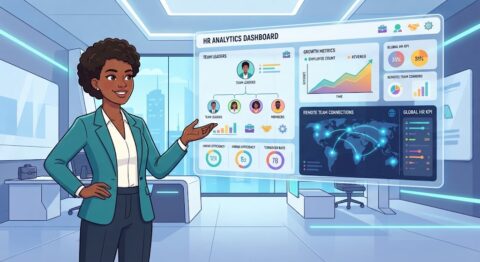
7 Proven Career Benefits of Human Resources Master’s Programs Online
If you are a mid-level professional looking to elevate your trajectory, exploring human resources master’s programs online might be the most strategic move you make this year. The landscape of talent acquisition and organizational development is evolving rapidly. To secure a seat at the executive table, you need more than just foundational experience; you need advanced analytical and strategic capabilities.
Modern business demands leaders who understand the intersection of human capital and corporate strategy. An HR master’s degree online provides you with the high-level frameworks necessary to transform traditional administrative departments into dynamic, data-driven powerhouses. By investing in a distance learning HR program, you position yourself as a forward-thinking expert ready to tackle complex workplace challenges, from remote workforce management to intricate employment law.
Key Takeaways:
• Understand how human resources master’s programs online accelerate your climb to the C-suite.
• Discover the essential hr leadership skills gained through an advanced curriculum.
• Learn how to avoid costly mistakes when selecting flexible hr master’s degree options.
• Maximize your masters in human resources salary potential by mastering people analytics.
Why Earning Your HR Degree Remotely is a Strategic Move
The decision to pursue an online master of human resources is increasingly popular among ambitious professionals. Traditional, on-campus degrees often require taking a leave of absence or sacrificing valuable career momentum. In contrast, remote learning for hr professionals allows you to apply classroom theories directly to your current workplace in real time. You can analyze your organization’s actual employee engagement metrics while studying the underlying psychological principles.
Flexibility is the cornerstone of these digital programs. As an HR professional, your schedule is constantly shifting to accommodate employee needs, talent acquisition interviews, and strategic planning sessions. A flexible hr master’s degree empowers you to engage with complex coursework during your optimal learning hours. Whether it involves early morning study sessions or late-night case study analyses, you retain complete control over your professional development timeline.
Furthermore, the networking opportunities within an online cohort are uniquely diverse. You will collaborate with peers across various industries and geographic locations, exposing you to a wide array of corporate cultures and HR challenges. This global perspective is invaluable when developing broad, inclusive policies. It enriches your understanding of human resources management degree concepts and prepares you for multinational leadership roles.
Core Skills Gained from Human Resources Master’s Programs Online
When you enroll in human resources master’s programs online, you transition from executing tactical tasks to designing high-level strategies. A significant portion of the curriculum is dedicated to mastering people analytics. Instead of relying on intuition for hiring or retention, you learn to harness data to predict employee turnover, optimize compensation packages, and measure the ROI of training initiatives. This data-first approach is what modern CEOs demand from their HR executives.
Another critical competency developed is advanced employment law and compliance. The regulatory landscape governing remote work, independent contractors, and global talent pools is remarkably complex. Your studies will equip you to navigate these legal intricacies confidently, protecting your organization from costly litigation. You will dive deep into collective bargaining, diversity and inclusion frameworks, and risk management strategies that form the bedrock of corporate resilience.
Finally, these programs heavily emphasize change management and organizational psychology. You will uncover the psychological drivers of employee motivation and learn how to shepherd teams through mergers, technological implementations, and cultural shifts. Developing robust hr leadership skills ensures that you can guide stakeholders through uncertainty. This is where you truly learn the art of transitioning into hr leadership seamlessly and effectively.
How Online Education Transforms Talent Acquisition
Talent acquisition is no longer just about posting a job description; it is a sophisticated marketing and operations endeavor. The best online hr degree benefits include a deep dive into advanced recruitment marketing and employer branding. You will explore how to craft compelling narratives that attract top-tier candidates in a highly competitive labor market. Understanding candidate personas and the psychology of the job search is central to this modern approach.
Additionally, advanced degrees provide comprehensive training on Applicant Tracking Systems (ATS) and AI-driven screening tools. You will learn how to audit these technologies to eliminate algorithmic bias and ensure equitable hiring practices. By mastering these digital hr management online courses, you ensure your organization’s recruitment funnel is both highly efficient and fiercely inclusive. You become an architect of the modern workforce.
Beyond recruitment, you will study the science of onboarding and long-term talent retention. It is one thing to hire brilliant minds; it is another to keep them engaged. You will design robust onboarding architectures that integrate new hires into the company culture rapidly. By understanding the nuances of employee lifecycle management, you significantly reduce churn and enhance overall organizational productivity.
Salary Trajectory and Executive Leadership Opportunities
The financial return on investment for an advanced HR degree can be substantial. Exploring the masters in human resources salary data reveals a clear premium for professionals holding graduate qualifications. Organizations are willing to pay top dollar for individuals who can strategically align human capital with broader business objectives. Moving from a generalist role to a specialized director or VP position often comes with a significant compensation bump, including lucrative performance bonuses.
To truly maximize your earning potential, it is essential to stay informed about industry standards. According to prominent industry bodies, continuing education is a proven differentiator. If you are serious about advancing your hr career, combining practical experience with theoretical mastery is the gold standard [1]. Executive search firms specifically hunt for candidates who demonstrate a commitment to lifelong learning and strategic HR excellence.
Ultimately, an advanced degree serves as a powerful signal to the C-suite. It proves that you possess the analytical rigor, business acumen, and leadership capacity required to drive enterprise-wide transformation. Whether you are aiming for the role of Chief Human Resources Officer (CHRO) or a specialized talent director, the credentials earned through these rigorous programs validate your expertise and position you as an indispensable corporate asset.
Red Flags to Avoid When Choosing Human Resources Master’s Programs Online
Not all distance learning HR programs are created equal, and selecting the wrong institution can derail your professional development. The most critical red flag to watch for is a lack of regional or industry-specific accreditation. If a program does not hold recognized credentials, your degree may not carry the necessary weight with top-tier employers. Always verify that the curriculum aligns with established professional standards, such as those set by leading HR associations.
Another major warning sign is a faculty lacking real-world corporate experience. You need professors who have navigated complex HR crises, managed international payrolls, and executed successful talent strategies in the modern business environment. If the instructors are purely academic and disconnected from current corporate realities, the program will fail to prepare you for the trenches of HR leadership. Scrutinize the faculty directory before making any financial commitments.
Finally, avoid programs that do not offer robust career support and networking opportunities. A vital component of any master’s degree is the alumni network you gain access to. If the institution does not facilitate peer interactions, mentorship programs, or direct connections with corporate recruiters, you are missing out on half the value of the degree. Be cautious of best hr certifications or degrees that function solely as isolated, self-paced reading modules.
Insights on HR Degree Value:
Frequently Asked Questions About Advanced HR Education
Prospective students often ask: Is it better to pursue an MBA with an HR concentration or a dedicated Master of Science in Human Resources? The answer depends entirely on your long-term career goals. An MBA provides a broader foundation in finance, marketing, and operations, making it ideal if you want to oversee multiple business units. A dedicated HR master’s offers a deep, specialized dive into labor laws, compensation structuring, and organizational behavior.
Another common question revolves around the value of shrm certification vs masters degrees. Both hold immense value, but they serve different purposes. A certification proves your immediate tactical competence and knowledge of standard HR practices. In contrast, a master’s degree develops your strategic thinking, research capabilities, and long-term executive leadership potential. Many top-tier professionals choose to pursue both to solidify their standing in the industry.
Finally, professionals often wonder how long it takes to complete an online master of human resources. Most flexible programs are designed to be completed in 18 to 24 months of part-time study. This timeline allows you to balance your corporate responsibilities with rigorous academic coursework. By pacing yourself effectively, you can ensure a deep understanding of the material without burning out, setting the stage for a sustainable and thriving HR career.


Leave a Reply