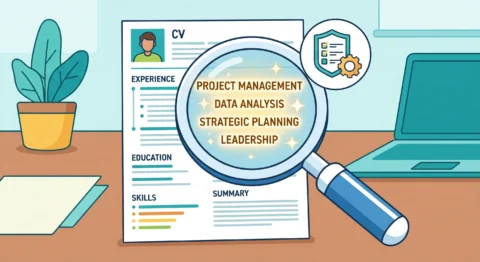
Secrets to Beat Resume Screening Software in 2027
Navigating the modern job market requires more than just a stellar work history; it demands a deep understanding of how to beat resume screening software. Every time you submit an application to a mid-sized or enterprise-level company, your document is first evaluated by a machine rather than a human being. These digital gatekeepers are ruthlessly efficient, filtering out up to 75% of applicants before a recruiter ever sees their name. If your application keeps disappearing into a black hole, the algorithm is likely rejecting you based on technicalities rather than a lack of actual qualifications.
Mastering these automated hiring tools is the ultimate blueprint for career advancement in 2027. This guide will dismantle the mystery behind applicant tracking systems and provide actionable strategies to ensure your CV always lands on a human desk. We are going to explore the precise mechanics of keyword targeting, formatting rules, and semantic search algorithms that define today’s hiring landscape. Here are the key takeaways you will master in this comprehensive guide:
– The hidden mechanics of modern applicant tracking systems (ATS).
– Exact keyword optimization strategies for maximum visibility.
– The best resume format for automated screening and readability.
– Critical formatting errors that instantly trigger algorithmic rejection.
– Techniques for bypassing AI resume screening algorithms with strategic context.

Understanding How Automated Hiring Tools Actually Work
To bypass the gatekeepers, you must first understand how employers use resume screening software on a daily basis. At its core, an ATS acts as a massive digital filing cabinet equipped with a highly sophisticated search engine. When you upload your document, the system initiates a parsing process, stripping away all design elements to extract raw text data. It categorizes this information into specific fields: contact details, work experience, education, and hard skills. If your document is poorly formatted, this extraction fails, and your profile is instantly scored at the bottom of the candidate pool.
Recruiters do not read every parsed file; instead, they query the database using specific Boolean search strings and job-related criteria. The software then ranks candidates based on how closely their extracted data matches the recruiter’s search parameters. This means your success heavily relies on anticipating the exact phrases a hiring manager will type into their dashboard. Top resume screening software tools 2027 utilize semantic AI, meaning they look for contextual relevance rather than just exact word matches, making your narrative just as important as your bullet points.
Furthermore, many platforms incorporate “knock-out” questions during the application phase. These are binary filters—such as “Do you have 5 years of Python experience?”—designed to instantly eliminate unqualified candidates. Even if your uploaded CV is flawless, failing a knock-out parameter will override your document’s optimization. Understanding this interplay between parsed document data and application form inputs is essential for surviving the initial digital cull.
The Ultimate Resume Screening Software Keyword Optimization Strategies
Mastering resume screening software keyword optimization is the most potent weapon in your job search arsenal. The foundation of this strategy requires dissecting the specific job description you are targeting. You must identify the core competencies, technical proficiencies, and industry-specific jargon the employer repeatedly emphasizes. These terms act as the algorithmic bridge between your professional history and the recruiter’s search queries.
It is crucial to avoid “keyword stuffing,” a dated tactic where candidates paste a block of hidden text into their document. Modern AI resume parser technology effortlessly detects this manipulation, leading to immediate disqualification. Instead, integrate these vital terms naturally within your accomplishment statements. For example, if the target role requires “agile project management,” do not just list it in a skills section. Weave it into a bullet point: “Spearheaded agile project management initiatives that increased team delivery speed by 22%.” For comprehensive guidance on structuring these powerful bullet points, refer to our advanced interview preparation strategies guide.
Always mirror the exact phrasing used by the employer. If the job description asks for “Client Relationship Management,” do not abbreviate it to “CRM” unless both variations are present in the posting. Creating a dedicated “Core Competencies” section at the top of your document can serve as a highly effective keyword injection zone. This ensures that the parsing engine immediately registers your primary qualifications, heavily boosting your initial relevancy score before it even reads your chronological work history.
Perfecting Your ATS Friendly CV Formats for Maximum Readability
Visual aesthetics mean absolutely nothing if a machine cannot read the underlying text. Designing ATS friendly CV formats is a critical exercise in balancing professional layout with technical compatibility. Complex templates featuring multiple columns, intricate tables, and graphic elements often confuse parsing algorithms. When the software attempts to read left-to-right, a multi-column layout causes sentences to blend chaotically, destroying your carefully crafted career narrative.
Stick to a clean, single-column structure. Use standard, widely recognized fonts like Arial, Calibri, or Helvetica, as custom typography can sometimes render incorrectly during the data extraction phase. Moreover, standard section headings are mandatory. While naming your experience section “My Professional Journey” sounds creative, an algorithm expects to see standard headers like “Work Experience,” “Education,” or “Skills.” Deviating from these standard labels often results in the software skipping entire sections of your background. To understand the broader impact of standardizing HR systems, review the SHRM guide on selecting ATS platforms, which highlights how recruiters configure these databases.
When saving your final document, always follow the employer’s explicit instructions. Creating an ATS friendly resume PDF is generally the safest route, as it locks your formatting in place while remaining fully text-searchable. However, if an application portal specifically requests a Microsoft Word (.docx) file, you must comply. Some legacy systems still struggle with PDF image-layering, making Word documents a safer bet when dealing with older, rigid infrastructure.
Critical Mistakes That Get You Rejected by AI Resume Parsers
Even highly qualified professionals fall victim to seemingly minor technical errors that result in automatic rejection. One of the most glaring signs your resume failed screening software is receiving a generic rejection email mere minutes after submission. This rapid turnaround proves a human never evaluated your profile. The most common culprit is placing critical contact information, such as your email address or LinkedIn URL, inside the document’s header or footer section. Many parsing tools completely ignore header and footer margins, leaving your digital profile devoid of contact details.
Watch this insightful breakdown on avoiding common ATS pitfalls:
Another severe mistake is relying on images, charts, or progress bars to demonstrate your proficiency levels. An algorithm cannot interpret a graphic that shows your leadership skills at “80%.” It only reads text. By substituting quantifiable achievements with abstract graphics, you essentially submit a blank section to the database. Furthermore, using unpredictable date formats can scramble your career timeline. Always use standard formatting, such as “Month Year – Month Year” (e.g., January 2021 – Present), to ensure the system accurately calculates your total years of experience.
Finally, applying for multiple disparate roles at the same company can trigger a red flag within resume screening software for large companies. The system consolidates your applicant profile, allowing recruiters to see every position you have pursued. If you apply for a Senior Financial Analyst role and a Marketing Coordinator position simultaneously, the algorithm highlights this conflicting data, painting you as a desperate, unfocused candidate rather than a targeted professional.
Bypassing AI Resume Screening Algorithms with Human Context
While technical compliance is mandatory, purely robotic optimization will not win you the interview. Once your profile successfully clears the digital hurdles, a human recruiter will eventually review your document. This is where bypassing AI resume screening algorithms with strategic, human-centric context becomes vital. Your document must transition seamlessly from a keyword-rich database entry into a compelling professional narrative that resonates with human empathy and business logic.
To achieve this, anchor your technical keywords to measurable business outcomes. Do not merely state that you are proficient in “budget management.” Instead, articulate that you “directed a $5M departmental budget, reducing annual operational waste by 14% through targeted vendor renegotiations.” The algorithmic filter registers the keyword “budget management,” while the human recruiter immediately recognizes the financial value you bring to the organization. This dual-layered writing approach is the hallmark of elite career advancement.
Always inject industry-specific context that demonstrates a deep understanding of current market challenges. A robust professional summary at the top of your document should synthesize your hard skills, your leadership philosophy, and the unique problem-solving capabilities you offer. By ensuring your profile speaks the binary language of the machines while maintaining the persuasive tone required for human connection, you virtually guarantee your transition from an applicant tracking dashboard to a real-world interview room.
Frequently Asked Questions About Applicant Tracking Systems (ATS)
Is there a reliable free resume screening software checker I can use?
Yes, several online platforms allow you to test your document against simulated algorithms. Tools like Jobscan or Resume Worded compare your CV against a specific job description, providing a match percentage and highlighting missing keywords. While no third-party tool perfectly replicates a company’s bespoke internal system, they are excellent for identifying glaring formatting errors and basic keyword omissions before you officially apply.
How to beat resume screening software if I am changing careers?
Career changers face a unique challenge because they often lack the exact historical job titles the system searches for. The solution is hyper-focusing on transferable skills. You must extensively study the target industry’s job descriptions and adapt your past experience to mirror their terminology. Use a hybrid resume format that highlights your relevant skill categories first, pulling the algorithmic focus away from your chronological job titles and placing it squarely on your functional competencies.




Leave a Reply