
Why a Modern CV Is Your Ultimate Career Blueprint: Key Takeaways
Crafting a high-converting modern cv is no longer about listing every historical job duty you have ever performed. Corporate recruiters spend mere seconds scanning your initial application before deciding whether you merit an interview invite.
• Prioritize Dual Readability: Structure every section so both automated screening algorithms and human hiring managers can extract your core value proposition instantly.
• Lead With Measurable Proof: Replace passive task descriptions with concrete business outcomes, revenue contributions, workflow optimizations, and verifiable performance indicators.
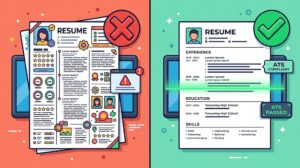
• Eliminate Visual Clutter: Ditch outdated skill progress bars, complex multi-column tables, and decorative graphics that corrupt automated text parsing software.
• Customize Every Submission: You must tailor a modern cv to a job description by aligning your top-third executive pitch with the employer’s exact operational pain points.
Mastering CV Formatting and Strategic Visual Hierarchy
Strategic cv formatting dictates how a hiring director’s eye travels across your page during that critical first glance. Selecting the best modern cv layout for job seekers means adopting an F-pattern visual hierarchy where your job titles, company names, and key metrics sit cleanly along the left-hand reading axis.
When structuring work experience in a modern cv , reverse-chronological order remains the undisputed gold standard across global corporate sectors. Recruiters want to trace your upward trajectory immediately without hunting through disconnected functional buckets or confusing timeline gaps.
Always choose a clean, single-column modern cv template that utilizes generous white space to prevent cognitive fatigue. Group your recent roles into concise three-to-five bullet blocks, reserving the heaviest detail for the positions most relevant to your target role over the past five years.
How to Write a Modern CV That Beats the Applicant Tracking System
Understanding how to write a modern cv requires demystifying how recruitment software actually filters incoming talent pipelines. An applicant tracking system does not reject you arbitrarily; rather, it parses your document into standardized digital fields and ranks your profile based on keyword relevance and contextual tenure.
Building an ats friendly modern cv design starts with using standard section headers like Work Experience, Core Competencies, and Education instead of creative labels. According to Harvard Business Review career planning insights, aligning your terminology directly with the employer’s stated qualifications significantly improves screening visibility across competitive markets.
Never hide critical contact details inside document headers or footers where older optical character recognition tools fail to look. Embed both the spelled-out industry term and its acronym naturally inside your accomplishment statements so your modern cv registers a strong match regardless of the recruiter’s boolean search query.
Highlighting Core Competencies on a Modern CV with Quantifiable Achievements
Forget the outdated career objective statement that only explains what you want from an employer. Replace that prime real estate with a sharp professional summary positioned right beneath your contact bar, functioning as a four-line executive elevator pitch that hooks the decision-maker immediately.
Effective highlighting core competencies on a modern cv means pairing a dedicated technical skills matrix with evidence-backed bullet points below. Start every single bullet with high-impact action verbs for a modern cv such as spearheaded, architected, negotiated, or overhauled to project ownership and leadership authority.
Anchor your claims with quantifiable achievements by applying the Challenge-Action-Result formula to every role you list. Before submitting your application, pair your upgraded document with our interview preparation framework so you can defend your metrics confidently during live hiring panels.
Common Modern CV Mistakes to Avoid and Critical HR Red Flags
Even seasoned executives sabotage their candidacy by falling into easily preventable formatting and psychological traps. Understanding common modern cv mistakes to avoid protects your application from landing in the instant rejection pile during high-volume corporate recruitment drives.
One glaring red flag is stuffing your document with vague buzzwords like “results-driven team player” without citing a single project outcome. Another fatal error is using Canva graphic templates loaded with floating text boxes, headshots, and Arbitrary percentage bars like “85% Leadership” that irritate seasoned HR directors.
Watch this expert breakdown on structuring your application to pass recruiter screening:
Additionally, never leave unexplained chronology gaps or include outdated personal details like marital status, full street addresses, or high school coursework. Keep your modern cv laser-focused on solving the hiring manager’s upcoming quarterly objectives.
Frequently Asked Questions About Building a Modern CV
Job seekers frequently encounter conflicting advice when upgrading their career documents for today’s hybrid and digital-first hiring landscape. Recruitment standards evolve rapidly alongside AI-assisted talent screening tools, making it essential to separate evidence-based HR practices from outdated myths.
While industry norms and length expectations vary by local market and seniority level, core readability principles remain universal. Whether you are targeting a mid-level corporate transition or a remote specialist role, clarity and impact always outperform decorative flair.
Below, we address the most pressing technical questions candidates ask when refining their modern cv for maximum interview conversion.
How Does a Modern CV vs Traditional Resume Format Differ in Practice?
Evaluating a modern cv vs traditional resume format reveals a fundamental shift from passive biography to strategic marketing. Traditional documents functioned like archival career logs, listing every responsibility in dense paragraphs using formal, stilted prose and serif typography.
Conversely, a modern cv operates as an agile performance portfolio designed for rapid digital consumption on both desktop monitors and mobile screens. It leads with a targeted executive summary, integrates a keyword-optimized core skills bank, and highlights measurable business ROI over routine daily duties.
Furthermore, contemporary versions include hyperlinked portfolio URLs and customized LinkedIn handles while stripping away obsolete phrases like “References available upon request.”
What Are the Best Modern CV Font and Margin Guidelines for Readability?
Following strict modern cv font and margin guidelines ensures your application looks polished across every operating system and applicant portal. Stick to clean, universally supported sans-serif typefaces such as Calibri, Inter, Arial, or Helvetica, which render crisply on high-resolution screens without straining the reader’s eyes.
Set your body text between 10.5 and 11.5 points, while keeping section headings between 13 and 15 points in bold weight for clear visual separation. Maintain uniform page margins between 0.5 and 1 inch on all four sides so your content never looks cramped or gets clipped during printing.
Finally, export your completed modern cv as a text-based DOCX or standard PDF file depending on the employer’s upload instructions to preserve exact line spacing.



Leave a Reply