
Mastering Interview Training: The Ultimate Blueprint to Land Your Dream Job
Entering today’s highly competitive job market without proper interview training is like walking into a high-stakes corporate negotiation entirely blindfolded. Whether you are a fresh graduate stepping into the corporate world or a seasoned mid-level professional looking for an executive transition, the fundamental rules of hiring have changed drastically. Modern recruiters and talent acquisition teams are no longer just looking for a simple match on paper; they are actively searching for emotional intelligence, impeccable cultural fit, and the proven ability to solve complex business problems under immense pressure.
Effective interview coaching goes far beyond memorizing generic answers to standard HR questions. It involves completely rewiring your professional communication style, understanding the psychological triggers of hiring managers, and mastering the fine art of corporate storytelling. When you invest time and energy into advanced job interview preparation, you instantly separate yourself from the vast majority of candidates who rely entirely on their resumes to do the talking. You transition from being a standard applicant to a highly sought-after business solution.
Why Traditional Interview Preparation Is No Longer Enough
For decades, job seekers relied on basic, surface-level advice like maintaining steady eye contact, dressing sharply, and bringing a freshly printed copy of their CV to the office. While these foundational elements remain necessary, they are merely the bare minimum expected by today’s applicant tracking systems (ATS) and human resources departments. True interview training requires a strategic, analytical approach to personal branding and behavioral psychology that most candidates completely overlook.
Today’s hiring managers are specifically trained to detect rehearsed, robotic, and inauthentic answers. They utilize advanced behavioral interviewing techniques designed to strip away polished exteriors and reveal your authentic problem-solving capabilities in real-time scenarios. If you are still relying on outdated internet advice from a decade ago, you risk sounding incredibly generic, ultimately leading to immediate rejection in favor of a more dynamic candidate.
Key Takeaways for Your Interview Success:
• Move beyond rote memorization and focus on adaptable, conversational frameworks.
• Actively decode the “hidden pain” driving the company’s urgent hiring need.
• Master your non-verbal communication and the deep psychology of first impressions.
• Prepare data-driven, quantifiable narratives to prove your past corporate impact.
The Psychology of the First 15 Seconds
Human psychology dictates that first impressions are formed with astonishing speed and are incredibly difficult to reverse. In the context of a high-stakes job interview, the hiring manager has likely made a subconscious decision about your baseline candidacy within the first fifteen seconds of your interaction. Your posture, your initial greeting, and the confident tone of your voice carry immense weight before you even answer the first formal behavioral question.
High-level interview training emphasizes the vital importance of projecting quiet confidence rather than frantic, nervous energy. When you open a conversation by immediately maintaining strong posture and delivering a warm, professional greeting, you shift the dynamic from a traditional interrogation to an equal-level business consultation. This subtle psychological shift establishes immediate authority, respect, and mutual professional understanding.
Watch this insightful guide on acing the first 15 seconds of your interview :
Core Interview Training Techniques You Must Master
To truly excel in modern hiring environments, you must adopt a rigorous, systematic approach to your preparation phase. The most successful candidates treat their upcoming interviews exactly like high-level executive business presentations. This means researching the company’s recent market performance, understanding their direct competitors, and seamlessly aligning your personal narrative with their overarching strategic goals for the upcoming fiscal year.
Furthermore, you must integrate your daily preparation into a comprehensive career development strategy. Knowing exactly where this specific role fits into your long-term professional trajectory allows you to speak with genuine passion and absolute clarity. It assures the hiring manager that you are not just looking for any random paycheck, but rather, you are specifically targeting this role to build your future.
Leveraging Mock Interviews for Real-World Confidence
One of the most effective and universally recommended methods for skill improvement is conducting rigorously timed mock interviews. By setting up a camera and recording yourself answering complex questions, you can critically review your own body language, pacing, and reliance on filler words. You will be surprised by how different you sound compared to how you imagine you sound in your head.
This critical self-auditing process is an absolute cornerstone of professional interview training. It ensures that your verbal delivery matches the exceptional quality of your actual professional experience. When you practice enough to build muscle memory, you eliminate the cognitive load of trying to remember your answers, freeing your mind to focus entirely on building genuine rapport with the interviewer.
Decoding the “Hidden Pain” Behind the Job Description
A published job description is rarely just a standard list of required daily tasks; it is a direct, public reflection of a severe problem the company is desperately trying to solve. Companies absolutely do not spend thousands of dollars on recruitment agencies and internal resources unless they are experiencing a specific operational pain point, bottleneck, or growth hurdle. Your primary goal before stepping into the room is to deeply analyze and identify that underlying issue.
Advanced candidates meticulously read between the lines of the job posting. If a description heavily emphasizes a “fast-paced environment” and “cross-functional collaboration,” the hidden pain is highly likely internal communication breakdowns, departmental silos, or consistently missed project deadlines. Framing your answers around solving these exact problems positions you as the ultimate organizational savior rather than just another standard applicant.
According to leading structured interview frameworks, modern recruiters are actively scoring your unique ability to diagnose their business needs on the spot. By addressing their unspoken challenges unprompted, you instantly elevate your perceived value and demonstrate a rare level of executive strategic thinking that practically guarantees a second-round callback.
The STAR Method Upgraded: Context, Action, Result, Impact
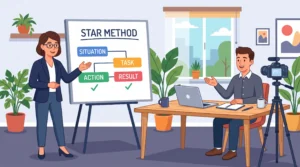
You are likely highly familiar with the traditional STAR method (Situation, Task, Action, Result) for answering standard behavioral questions. While fundamentally effective, it often leads to incredibly dry, transactional, and forgettable storytelling. To truly stand out in a crowded market, modern interview training advocates for a vastly upgraded approach that heavily emphasizes the overarching, long-term business impact of your direct actions.
Start by clearly defining the critical context and the massive stakes involved in your story. Why did this specific project matter to the bottom line? What revenue or reputation was at risk if you failed? By establishing dramatic tension early in your narrative, you keep the interviewer highly engaged on a human level. Then, transition smoothly into the specific actions you took, ensuring you highlight your individual strategic contribution rather than just hiding behind the team’s collective effort.
Finally, you must conclude with hard, quantifiable results and the long-term impact on the entire organization. Did your specific action save 40 hours a week, generate a 15% increase in quarterly revenue, or dramatically improve team morale? Tying your personal story directly to tangible, measurable business outcomes is the ultimate proof of your competence.
Common Red Flags and Mistakes to Avoid During Interviews
Even the most highly qualified and decorated candidates can completely ruin their chances by committing entirely avoidable interviewing errors. One of the most glaring and instant red flags for HR professionals is a candidate speaking negatively or bitterly about previous employers, bosses, or colleagues. Regardless of how genuinely toxic your last workplace may have been, complaining during an interview signals a severe lack of professional maturity.
Another critical, deal-breaking mistake is failing to ask insightful, business-focused questions at the end of the session. When the hiring manager asks if you have any questions for them, replying with a simple, dismissive “no, you covered everything” demonstrates a devastating lack of genuine interest in the role. You must always prepare highly targeted, intelligent questions about the company’s internal culture, upcoming market projects, and their 90-day performance expectations for the role.
Mastering the “What Is Your Greatest Weakness?” Trap
This classic, dreaded interview question continues to trip up even the most thoroughly prepared professionals. The absolute worst possible response is offering a thinly disguised strength, such as falsely claiming you are a “stubborn perfectionist” or that you “simply care too much and work too hard.” Hiring managers see right through these tired clichés immediately, instantly docking points for your lack of self-awareness and authenticity.
The correct, high-level strategy is to provide a genuine, low-stakes weakness that does not directly impact the core, critical competencies of the specific job you are applying for. More importantly, you must immediately pivot the conversation to the proactive, measurable steps you are currently taking to overcome this exact challenge. This flawless pivot demonstrates high emotional intelligence, a dedicated growth mindset, and a stellar commitment to continuous self-improvement.
Your Pre-Interview Checklist for Guaranteed Success
Consistency in your preparation is the ultimate secret to unlocking peak interview performance. Before you ever log into a high-stakes virtual meeting or step foot into a corporate office building, you must diligently complete a rigorous pre-interview checklist. Begin by thoroughly researching all of your scheduled interviewers on LinkedIn to deeply understand their specific career backgrounds, tenures, and any potential shared professional interests or mutual connections.
Next, relentlessly optimize your physical or virtual speaking environment. If you are interviewing remotely via Zoom or Teams, ensure your background is immaculately clean, your facial lighting is bright and flattering, and your microphone delivers broadcast-quality, crystal-clear audio. Preventable technical difficulties instantly break the conversational flow, ruin rapport, and can subconsciously associate you with workplace frustration and incompetence in the interviewer’s mind.
Finally, take the time to meticulously prepare your personal “brag folder.” This essential toolkit should include three extra physical copies of your perfectly formatted CV, a curated list of elite professional references, and a detailed cheat-sheet document highlighting your most significant career metrics and achievements. Having this vital data directly at your fingertips ensures you can smoothly reference specific growth percentages and operational milestones without awkwardly fumbling for words under intense pressure.
Frequently Asked Questions About Interview Training
How long should I spend preparing for a job interview?
Ideally, you should dedicate at least three to five hours of deep, focused interview training for each specific role. This includes thoroughly researching the company’s recent news, practicing your behavioral stories out loud multiple times, and meticulously tailoring your answers to align perfectly with the unique requirements of the job description.
Is professional interview coaching actually worth the financial investment?
For highly competitive corporate roles or lucrative executive-level transitions, investing in professional interview training can yield a massive, life-changing return on investment. A dedicated, experienced coach can rapidly identify critical blind spots in your delivery, help you confidently negotiate a significantly higher starting salary, and build the unshakeable confidence necessary to dominate the conversation.
What should I do if I simply do not know the answer to a technical question?
Never attempt to fake an answer or lie to an experienced hiring manager. Instead, confidently and calmly state that while you do not have direct, hands-on experience with that specific software or isolated scenario, you possess a proven, documented track record of rapidly mastering new skills. Immediately provide a quick, relevant example of a time you successfully adapted to a steep learning curve in a past role to reassure them of your agility.


Leave a Reply