Why a Medical Student CV Template Is Your Ultimate Clinical Asset
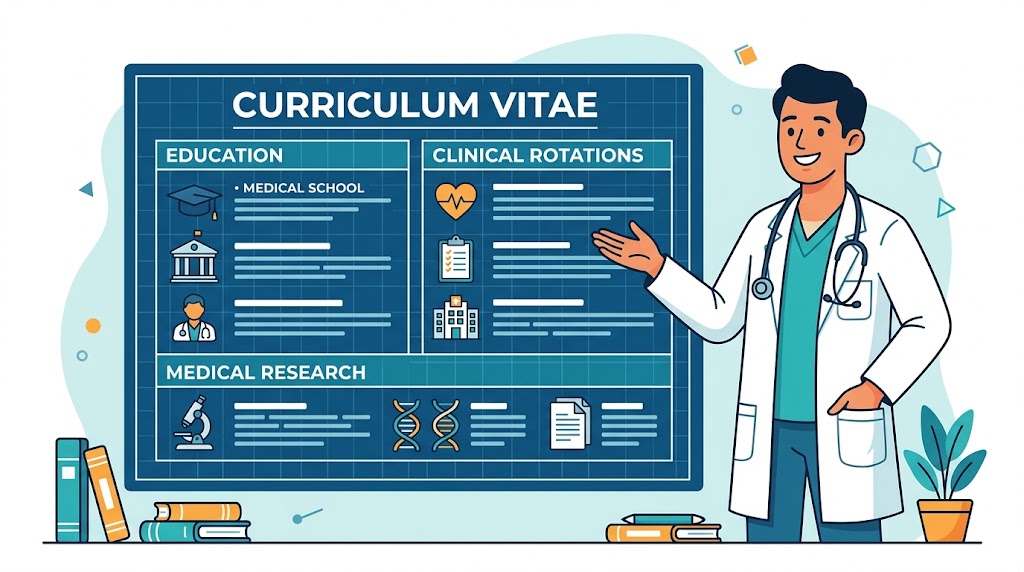
Selecting the right medical student cv template is the foundational step toward securing competitive clinical electives, hospital sub-internships, and residency interviews. Unlike a condensed corporate document, an academic curriculum vitae provides a comprehensive, multi-page record of your medical training, research output, and patient care competencies. Program directors and clinical faculty evaluate hundreds of dossiers weekly, meaning your layout must communicate clinical readiness within seconds.
Understanding how to format a medical student CV for residency prevents your hardest-earned accomplishments from getting buried under cluttered typography. Modern hospital recruitment portals rely on healthcare ATS optimization to filter applicants before a human reviewer ever opens the file. Structuring your credentials with precision ensures both algorithmic parsers and busy attending physicians immediately recognize your value.
Key Takeaways: • Use a clean, reverse-chronological medical student cv template with standardized clinical headings. • Prioritize an ATS friendly curriculum vitae for medical students by avoiding tables, text boxes, and multi-column graphics. • Quantify clinical exposure and medical school achievements using active clinical verbs and verifiable metrics.

Core Architecture of an ATS-Compliant Academic Curriculum Vitae
Knowing the difference between a medical CV and a clinical resume protects you from cutting vital academic credentials too early in your career. While corporate resumes restrict candidates to a single page, a residency application CV expands as you accumulate peer-reviewed publications, clinical clerkships, and committee leadership roles. Every section must follow a predictable hierarchy that mirrors national medical education standards.
Begin your document with crisp contact details, followed immediately by your medical education, expected graduation date, and undergraduate degree. When documenting USMLE scores and academic honors , place societies like Alpha Omega Alpha or Gold Humanism directly beneath your medical school entry so selection committees spot your academic standing immediately. Consistent margin alignment and twelve-point fonts keep dense clinical histories effortless to scan.
Adopting the best CV structure for clinical clerkship applications means eliminating decorative icons that confuse hospital parsing software. A well-engineered medical student cv template relies on bold section headers, clear date ranges aligned to the right margin, and concise bullet points. This structural discipline projects clinical professionalism before you even step into an interview room.
How to Customize Your Medical Student CV Template for Clinical Rotations
Transitioning from preclinical coursework to hospital wards requires adapting your medical student cv template to highlight hands-on patient management. Establishing the right chronological order for medical school clinical experience ensures your most advanced sub-internships and core clerkships appear first. According to the AAMC Careers in Medicine CV guidelines, organizing your clinical history with transparent dates and hospital locations helps evaluators verify your training progression.
Rather than listing passive observation duties, build a high-impact clinical rotation resume section by emphasizing supervised clinical autonomy. Use strong action verbs for patient care and clinical rotations such as conducted, formulated, synthesized, and collaborated when describing daily ward responsibilities. Detail the volume of patients managed, specific diagnostic procedures performed, and interdisciplinary rounds led under attending supervision.
Every rotation entry inside your medical student cv template should contain two to three focused bullet points demonstrating clinical growth and adaptability. Highlight exposure to diverse patient populations, electronic health record documentation mastery, and quality improvement initiatives completed within the department. Precise clinical descriptions prove you are ready for day-one intern responsibilities.
Structuring Medical Research Publications, Presentations, and Lab Experience
Academic medicine places immense weight on scholarly inquiry, making research a centerpiece of any competitive medical student cv template . When highlighting research publications on a medical CV , separate peer-reviewed journal articles, published abstracts, national poster presentations, and ongoing clinical projects into distinct sub-categories. Always format citations consistently using standard AMA bibliographic styles, bolding your own name within the author list.
If a manuscript is still under review, list it clearly under a submitted or in-preparation subheading rather than implying final publication. Articulate your exact methodological contribution—such as statistical analysis, protocol drafting, or patient cohort recruitment—and pair your document with a tailored healthcare cover letter and residency personal statement to contextualize your academic trajectory. Clear attribution demonstrates scientific integrity and analytical rigor.
Even if your project did not yield a first-author paper, your medical student cv template should capture the technical skills and clinical questions explored in the laboratory. Mention proficiency in biostatistics software, systematic literature reviews, or translational research protocols. Selection committees value persistence and familiarity with evidence-based medicine just as highly as published citations.
7 Fatal Formatting Mistakes and Hospital HR Red Flags to Avoid
Even high-achieving trainees sabotage their applications by committing common medical CV mistakes that program directors reject during initial screening. The most damaging red flag is misrepresenting authorship order or listing non-peer-reviewed blog posts alongside indexed medical journals. Academic verification teams routinely cross-reference PubMed IDs, and any exaggeration immediately disqualifies a candidate on professionalism grounds.
Another frequent pitfall is cluttering your medical student cv template with subjective skill bars, headshot photographs, or unexplained chronological gaps between academic terms. Avoid vague self-praise and instead anchor every claim in verifiable clinical outcomes, board pass status, or institutional service. Furthermore, when including leadership and volunteer work on a medical CV , connect community health outreach directly to patient advocacy and team coordination.
Finally, never submit an unproofread file or a modifiable word processor document that shifts margins across different operating systems. Always export your final medical student cv template as a clean PDF with standardized file naming before uploading to hospital portals. Watch the expert breakdown below to refine your medical narrative and avoid structural pitfalls.
Watch this practical walkthrough on structuring your medical student CV and personal profile:
Frequently Asked Questions About Building Your Medical CV
Navigating the transition from classroom evaluations to professional clinical dossiers raises critical questions about scope, length, and relevance. Because every teaching hospital and specialty department weighs academic metrics slightly differently, customizing your medical student cv template requires balancing comprehensive detail with rapid readability. Below are definitive answers to the most common dilemmas medical students encounter when finalizing their documents.
Before diving into specific scenarios, remember that your curriculum vitae is a living academic document that evolves every semester. Updating your medical student cv template immediately after completing a rotation, presenting a poster, or earning a clinical commendation prevents last-minute application stress. Keeping a master log ensures no volunteer clinic shift or mentoring role is accidentally forgotten.
Whether you are preparing for visiting clinical electives, research fellowships, or national residency match portals, clarity always wins over decoration. Review the guidelines below to fine-tune your section lengths and historical boundaries with total confidence.
How Long Should a Medical Student CV Template Be for Residency Applications?
Unlike standard corporate job seekers who must compress their work history onto a single page, medical trainees are expected to present a thorough academic record. For most third-year and fourth-year applicants, a well-structured medical student cv template naturally spans two to four full pages depending on research productivity and prior healthcare careers. Program directors never penalize a multi-page CV provided every entry delivers genuine clinical or scholarly substance.
However, length should never come from artificial padding, oversized fonts, or redundant descriptions of routine classroom attendance. If your document stretches onto a partial extra page with only three lines of text, tighten your bullet phrasing and spacing so every page looks balanced. Concise, high-density bullet points respect the reviewer’s limited time during peak interview season.
Focus on completeness across education, clinical rotations, peer-reviewed research, leadership, and community service. As long as every line reinforces your readiness for postgraduate clinical training, your page count will align naturally with academic medicine norms.
Should Pre-Medical Shadowing and Non-Clinical Jobs Remain on a Medical CV?
Once you matriculate into medical school, brief pre-medical physician shadowing hours from high school or early college should be removed from your medical student cv template . Clinical faculty assume you have already surpassed basic observation through your formal medical school clerkships and hospital rotations. Retaining introductory shadowing dilutes the authority of your supervised clinical diagnostic and treatment experiences.
Conversely, substantial prior employment—such as working as an emergency medical technician, clinical research coordinator, medical scribe, or corporate team manager—absolutely belongs on your CV. Frame these pre-medical roles around transferable healthcare competencies, crisis management, interprofessional communication, and operational leadership. Demonstrating real-world work ethic sets you apart from applicants with purely classroom backgrounds.
Similarly, undergraduate academic honors like graduating summa cum laude, Phi Beta Kappa induction, or varsity athletics leadership remain valuable indicators of grit and time management. Prune minor college club memberships, but preserve significant achievements that illustrate long-term dedication to medicine and community service.




Leave a Reply